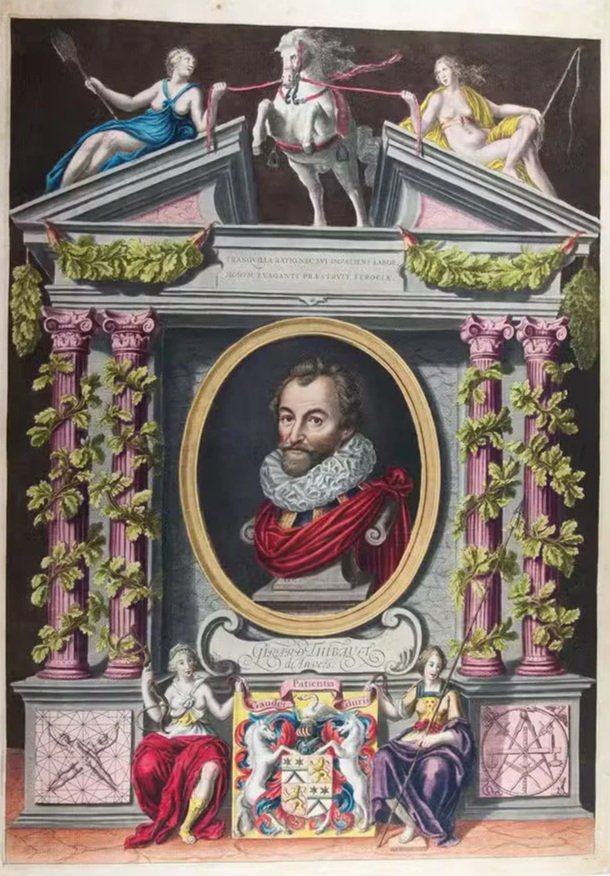
The hand painted Portrait plate of Gerard Thibault from an edition with a dedicatory inscription on the front free endleaf to Henri de Bourbon, Prince of Condé, by the colourist David Bailly, He is also attributed as providing the artwork for the bust/portrait of Thibault that the copper plate printing engravings were made from. It is notable that he is the son of Flemish fencing master and artist Peter Bailly and was also a student of copper plate engraver Jacques de Gheyn.
Gerard Thibault
First published in 1629, Gerard Thibault’s Academy of the Sword “mathematical rules on the foundation of a mysterious circle the theory and practice… of handling arms” stands as one of the most lavish treatises on the area of civilian swordplay with the rapier ever written. Funded by patrons that included the Prince of Orange, it utilized some of the most renowned artists and engravers in Amsterdam for its many plates and caused a special press to be created in order to accomodate it’s large size.
It was largely, and unfairly, dismissed by fencing scholars prior the the 21st century.as over complicated. Edgarton Castle dismissed the system as being too complex to be of any use
Instead of over complicated, we have found Thibault’s tretise on fencing with the rapier to be extremely detailed. This makes it an excellent source for reconstructing a unique martial art that was formerly lost to us. An elegant form steeped in postures and footwork reminiscent of elegant court dances and steeped in the sciences and philosophy of the Renaissance centers of higher learning.
There is an additional article by John Michael Greer that was written for the Asian Journal of Martial Arts. While the Journal is no longer in publication the article is available in anthology here. https://amzn.to/4t1Gsws
The translated book of Gerard Thibault’s text can be purchased here #CommisionEarned
Gerard Thibault was born to a Dutch family of Textiles traders in Antwerp in 1574. His family made their wealth from a trade with Spain. He was by all accounts a sickly child and took up fencing to aid his health. His early training in Amsterdam was under acclaimed Dutch fencing master Lambert Van Someren. He also studied medicine, architecture and painting in his early years.
Fencing master Lambert van Someren was fencing master in Antwerp from 1564 to 1584. His children are assumed to be Barend van Someren (1572 - 1632) and Paul van Someren I (1576 - ca. 1621) who were both involved in the art world.
Sometime around 1600, Gerard Thibault traveled to Spain and settled in Sanlucar de Barrameda, at the mouth of the Guadalquiir River. Sanlucar is the area of Spain in which Destreza founder Caranza spent his retirement.
While in Spain it is assumed that Thibault trained in the Spanish system of fencing known as Destreza. By this time Carranza, the founder of the system, was dead and Narvaez had taken over officially in Spain. However the Spanish school of fencing remained split as Pacheco Narvaez tried to strong arm respect and there were two factions of training. Narvaez had nothing good to say about Thibault and so we might assume for this reason as well as his location that he trained with the Carranzistas. He returned to Amsterdam by 1610. He seems to have stayed in Amsterdam at least until 1613.
Thibault In about 1611 presented himself and his system to the Dutch Fencing Masters assembled at Rotterdam. Here he demonstrated his new rules and took away the prize. He was then invited to the court of Prince Maurice to repeat the display. The Prince attended the demonstrations which lasted for several days and in which several of his officers took part. Thibault received recognition from Maurice's own hands.
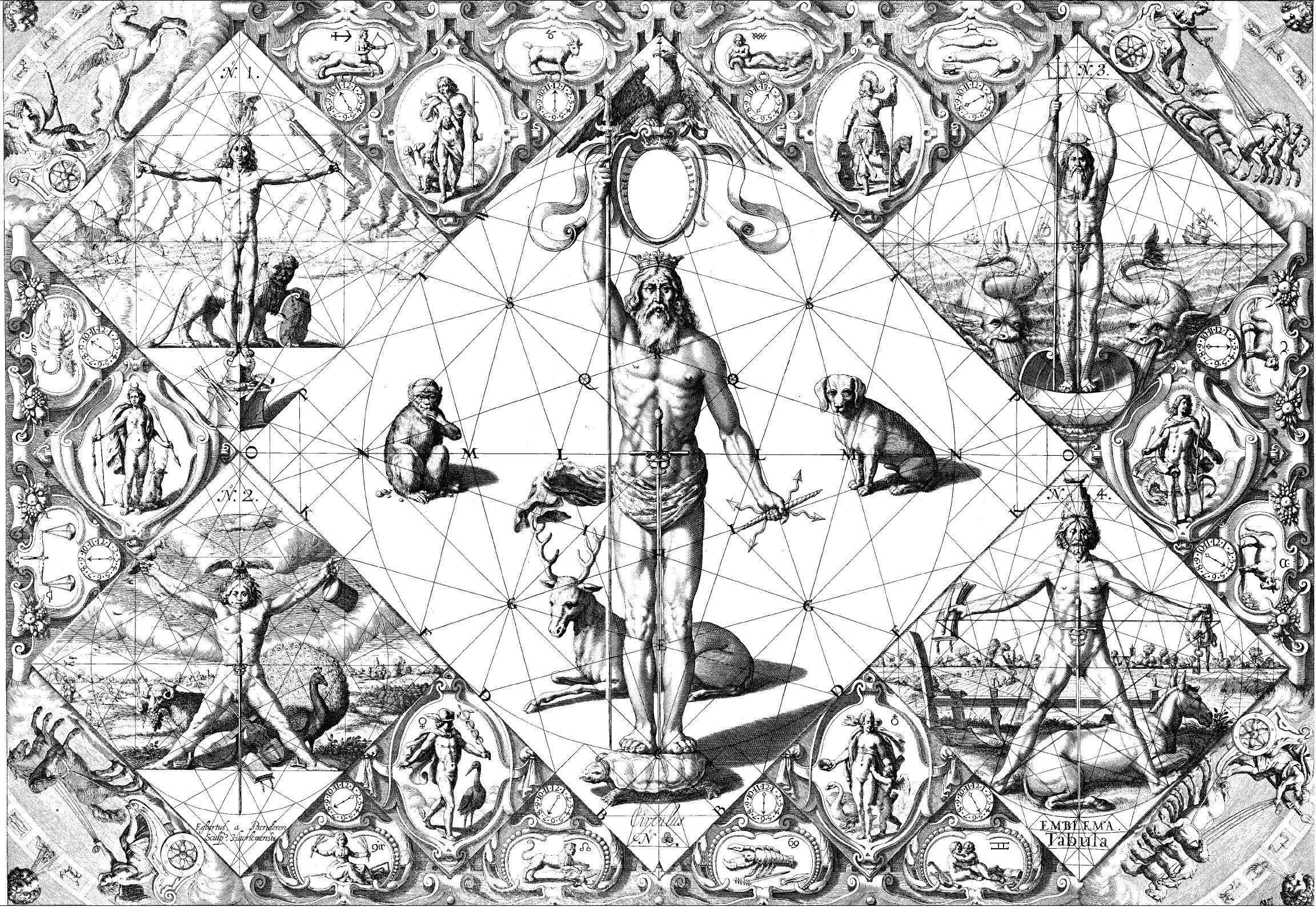
By 1615, if not before, Thibault had already begun plans for his book on swordsmanship to be called Academie de l’Espee. He gave several commissions to famed engraver Michel le Blon. The first two are the symbolic Emblema plates appearing between books 1 and 2 of Thibaults work. Additionally he had 3 smaller calling cards made. In December of 1615 Thibault would accept an invitation to move to Cleves where he would demonstrate his new rules of fencing at court.
Thibault would depart Cleves and appear in Leiden in 1617 to visit his nephews who were students at the university, he would then settle in Amsterdam and continue working on his book. In 1622 Thibault would settle in Rapenburg and enroll as a student of mathematics at the University of Leiden. By 1624 Thibault would appear to be the fencing master at the University. Gerard Thibault died in 1628 and his book on fencing was first published after his death in 1630. The book was never finished, leaving the chapters on fencing from horseback unfinished.
Thibault’s book received publication licences from Louis XIII, the United
Netherlands and Frederick II and was published under the authority of the Holy Roman Emporer Ferdinand II. This was in the midst of the 30 Years War fueled by the push against Protestants.
